What Hypnotherapy Actually Does to Your Brain (And Why High Performers Have Used It for Decades)
July 1, 2026 · By Paola Mendez, Certified RTT Hypnotherapist · Updated September 20, 2026

Most people have a picture of hypnotherapy that comes from a stage show or a movie.
A swinging pocket watch. Someone clucking like a chicken. A magician-type figure with an unsettling amount of control over a helpless subject.
That picture has almost nothing to do with what hypnotherapy actually is. And the gap between the misconception and the reality is part of why so many people don't consider it. And why those who do are often surprised by how different the experience is from what they expected.
I'm Paola Mendez, a certified RTT (Rapid Transformational Therapy) hypnotherapist trained under the method developed by Marisa Peer. In this post I'm going to explain what hypnotherapy actually does (the mechanism, not the mythology) and why people like Adele, Tiger Woods, Sylvester Stallone, and Princess Diana have used it quietly for decades.
Because once you understand how it works, it stops seeming surprising that high performers reach for it. It starts seeming obvious.
If you're curious about whether RTT hypnotherapy could help you,
a private 90-minute session is the place to start.
Available in Miami and remotely worldwide.
In this article
The conscious vs. subconscious mind: why the distinction matters
How subconscious beliefs form and why they're so hard to change
What Hypnosis Actually Is (and Isn't)
Hypnosis is a natural state of focused, relaxed attention (sometimes called a trance) in which the critical, analytical conscious mind becomes quieter, and the subconscious mind becomes more accessible.
You've been in this state before. That feeling just before sleep when your thoughts become dreamlike but you're still aware. The absorption of being completely lost in a book or film. Long-distance driving when you arrive somewhere and realize you weren't consciously navigating the last ten minutes. These are all naturally occurring hypnotic states: moments when the conscious mind steps back and the subconscious takes the wheel.
In a hypnotherapy session, this state is deliberately induced through relaxation, focused breathing, and guided imagery. You remain fully conscious and in control throughout. You cannot be made to say or do anything against your will. You can exit the state at any time. The experience is less like being taken over and more like having a clear, unobstructed line of communication with a part of your mind you don't normally have direct access to.
The Conscious vs. Subconscious Mind & Why the Distinction Matters
To understand why hypnotherapy works where other approaches sometimes don't, you need to understand the difference between what the conscious mind does and what the subconscious mind does.
The conscious mind is the part you identify as "you": the inner voice, the one making deliberate decisions, the one reading this sentence right now. It's analytical, logical, goal-directed, and relatively slow. It can hold roughly 7 pieces of information at once.
The subconscious mind runs everything else. It processes roughly 11 million bits of information per second (compared to the conscious mind's 50). It governs your automatic responses, your emotional reactions, your habits, your physical sensations, and, most importantly, your beliefs. Not the beliefs you'd state if someone asked, but the operating beliefs: the deeply held conclusions about what you are, what the world is, and what you deserve.
The subconscious doesn't reason. It doesn't update based on new information. It stores beliefs and runs them: loyally, persistently, regardless of whether they still serve you. A belief formed at age seven runs with the same fidelity at age forty-five, unless something specifically goes in and changes it.
This is why you can know, consciously, that you don't need to eat when you're stressed; and do it anyway. Why you can know, consciously, that you're capable; and still feel paralyzed by self-doubt. Why you can know, consciously, that a relationship ended years ago; and still carry the anxiety it left behind. The conscious knowledge doesn't override the subconscious program. They operate in different systems.
Hypnotherapy is one of the few approaches specifically designed to work in the subconscious system, where the programs actually live.
How Subconscious Beliefs Form and Why They're So Hard to Change
Between birth and approximately age seven, the brain operates in a highly receptive, suggestible state (similar to a hypnotic state). This is why childhood experiences have such lasting influence. The subconscious is essentially wide open, taking in information and drawing conclusions from everything it encounters.
A child who grows up in an environment where love feels conditional may form the belief: I am only acceptable when I perform well. A child who experiences chaos may conclude: The world is not safe. A child who is told, repeatedly or implicitly, that they are too much or not enough may form the belief: I need to shrink myself to be loved.
These conclusions make perfect sense given the information available at the time. The brain is doing its job: finding patterns, forming rules, building a model of how the world works so it can predict and navigate it.
The problem is that the brain files these beliefs as permanent operating instructions, not as provisional conclusions subject to revision. Decades later, the original evidence is long gone but the program is still running. And because the subconscious doesn't respond to conscious argument, you can't simply decide to believe differently. Knowing the belief is irrational doesn't dissolve it.
This is why so many people find that traditional talk therapy helps them understand their patterns without fully resolving them. Understanding, by itself, is a conscious-mind activity. The belief lives somewhere the conscious mind can't directly reach.
What Hypnotherapy Actually Does in the Session
A hypnotherapy session works by creating a state in which the subconscious mind is directly accessible; the critical, gatekeeping function of the conscious mind is quieted; and the deeper material can surface and be worked with.
In this state, several things become possible that aren't possible in ordinary waking consciousness:
Regression:
The subconscious can be guided back to the original scene or period in which a belief was formed; not to relive it traumatically, but to revisit it from a safe, adult perspective. What did the younger version of you conclude from that experience? What did you decide about yourself, about others, about the world? With adult understanding and perspective, that conclusion can be re-examined.
Reframing:
The adult self can give the younger self what it didn't have at the time: understanding, context, compassion. The belief that made sense given seven-year-old evidence may look entirely different when viewed with forty-year-old eyes. When the new perspective is introduced in the subconscious state, it has the same receptivity that the original belief formed in.
Direct suggestion:
In the hypnotic state, the subconscious is receptive to new information in a way it isn't when the critical mind is engaged. New beliefs, carefully constructed to reflect what is actually true about the person, can be introduced and begin to take root.
The session doesn't erase what happened. It changes what the subconscious concluded from it; and with it, the behavioral and emotional output that conclusion was generating.
The research:
A 1995 meta-analysis in the Journal of Consulting and Clinical Psychology (Kirsch et al.) found hypnotherapy patients lost more than twice the weight of control groups and maintained results at two-year follow-up. A 2019 meta-analysis confirmed significant positive effects of hypnotherapy on anxiety. A 2018 systematic review in JCSM found improvement in 58% of sleep studies. Full science breakdown →
What the Celebrity Examples Reveal About the Mechanism
When you understand the mechanism, the celebrity examples stop being surprising anecdotes and start being illustrations of the same underlying principle.

Adele: stage fright
The anxiety she felt before performing wasn't about her voice or her talent. She knew she could sing. The anxiety was a subconscious belief, almost certainly rooted in earlier experience, that being seen and judged was dangerous. Rehearsal and technique addressed the conscious preparation. Hypnotherapy addressed the subconscious threat response.

Tiger Woods: composure under pressure
Dr. Jay Brunza began working with Tiger at age 13. What hypnotherapy built wasn't skill. Tiger already had that. It built the subconscious foundation that skill could stand on: the belief that he was safe, capable, and in control even when the pressure was at its highest. He later said: "I think I used it enough then that it's inherent in what I do now." That's what subconscious change looks like from the outside, an ability that seems innate but was deliberately installed.

Sylvester Stallone: creative confidence before Rocky
Stallone had the story. He had the drive. What hypnotherapy with Gil Boyne gave him was access to the belief that someone like him (broke, unknown, repeatedly rejected) was allowed to succeed on his own terms. Without that subconscious shift, the talent was bottled. With it, he wrote the entire Rocky screenplay in under 20 hours.
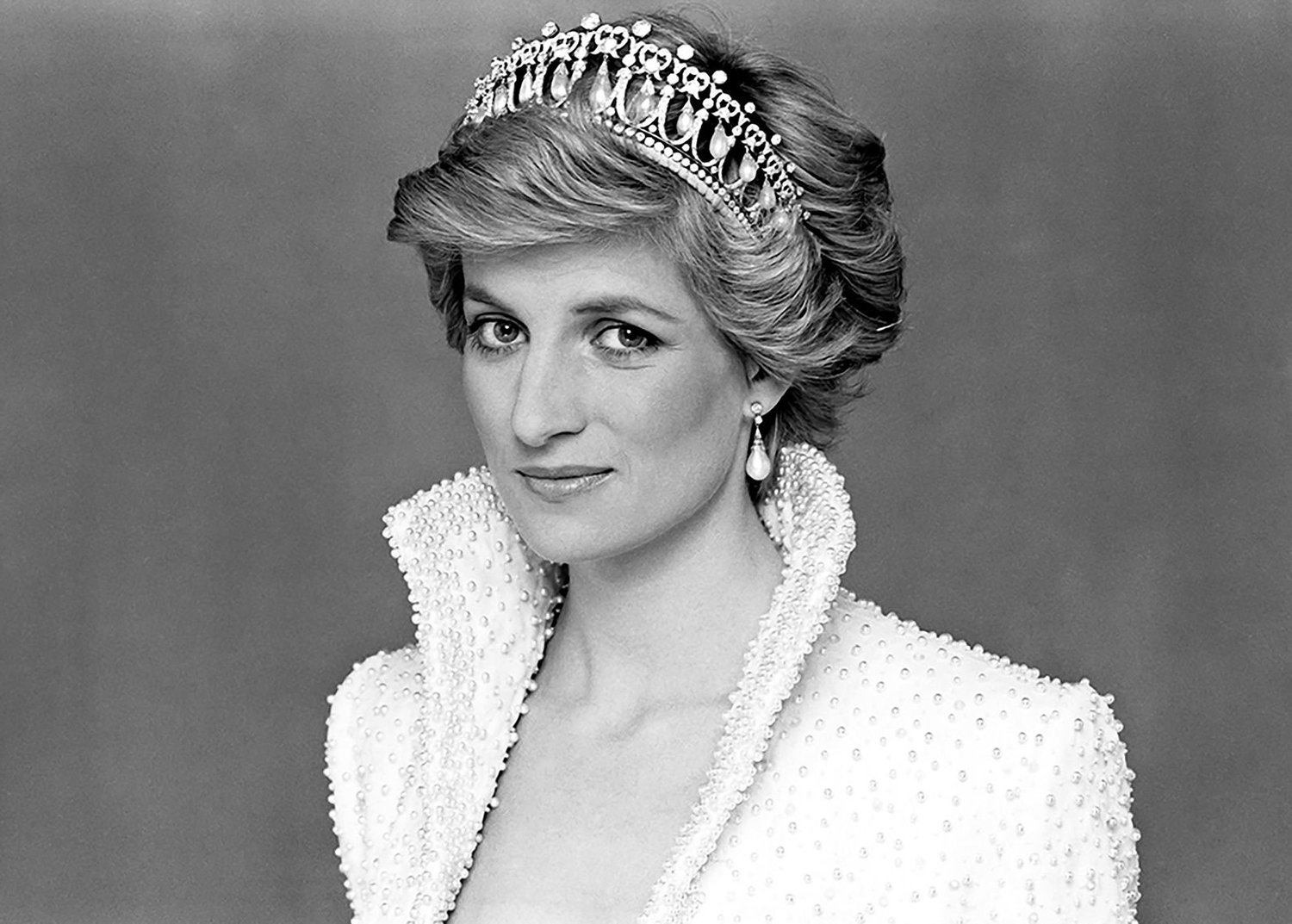
Princess Diana: working with Marisa Peer
Diana's therapist was Marisa Peer, the same Marisa Peer who developed the RTT methodology that I'm trained in and that Pao Hypnosis is built on. Diana carried enormous public pressure alongside deeply personal wounds. The work Marisa Peer did with her was rooted in the same principles RTT uses today: accessing the subconscious origins of the patterns, not just managing their surface expression.

Reese Witherspoon: panic before Wild
She described having panic attacks for three weeks before filming began. The panic wasn't because the role was beyond her. It was a subconscious threat response to something about the exposure, vulnerability, or stakes the role represented. Hypnotherapy quieted the response enough for her to access the ability that was already there.

Matt Damon: quitting smoking
Smoking is almost never just about nicotine. It's about what the habit represents to the subconscious: comfort, stress relief, identity, belonging. Willpower targets the behavior. Hypnotherapy targets the belief that the behavior was serving. Damon called it "the greatest decision I ever made in my life."
The pattern across all of them is the same: a gap between what the person was consciously capable of and what they were actually doing or experiencing. Hypnotherapy bridged that gap, not by adding something new, but by removing the subconscious obstruction that was keeping what was already there from coming through.
If there's a gap between what you know you're capable of and what you're actually experiencing (in anxiety, habits, relationships, or performance), that gap may be subconscious. A private RTT session is designed to work exactly there.
How RTT Goes Further
RTT (Rapid Transformational Therapy) was developed by Marisa Peer over thirty years of clinical practice. It combines hypnotherapy with elements of psychotherapy, NLP, CBT, and neuroscience, and it is specifically designed to produce meaningful change in fewer sessions than traditional therapy typically requires.
What distinguishes RTT from standard hypnotherapy is the regression component: RTT goes back to the original scene where the belief was formed, rather than working only in the present. This matters because beliefs that were formed in context (in a specific experience, with a specific emotional charge) often need to be addressed in context to be fully resolved. Understanding in the abstract that your childhood was difficult is different from revisiting, from a safe adult distance, the specific moment your brain decided it was unsafe.
RTT also produces a personalized audio recording after each session. The recording reinforces the new beliefs and suggestions introduced during the session, and clients listen to it daily for 21 days. This is based on the neuroscience of habit and belief formation: new neural pathways require repetition to become established. The recording creates the repetition in the same receptive state (sleep-adjacent, relaxed) that makes the suggestions most effective.
I trained under Marisa Peer's method. I work with clients in person in Miami and remotely worldwide. The areas I work with most often in private sessions: anxiety, emotional eating and weight, self-worth and confidence, relationship patterns, grief, and performance.
What to Expect from a Session with Paola
A private RTT session with me is 90 minutes. We begin with a conversation. I want to understand the pattern you're working with, when it started (or when you first noticed it), what you've already tried, and what you want to be different. This isn't small talk; it's the foundation of where we go in the session.
The hypnotherapy portion involves guided relaxation into the subconscious state, regression to relevant scenes and experiences, and the reframing and suggestion work that updates the belief. Clients frequently describe the experience as surprisingly gentle; nothing like the dramatic loss of control they expected.
After the session, you receive a personalized audio recording to listen to for 21 days. Most clients begin noticing shifts within the first week, sometimes in the session itself.
Sessions are available in person in Miami and remotely worldwide.
If you're not ready for a 1:1 session but want to experience what RTT-based hypnotherapy feels like, the Mochi Zen app offers RTT-based audio sessions for weight loss, anxiety, and insomnia, free for 7 days, no credit card required.
If what you've read here resonates, if you recognize the gap between what you consciously know and what you're actually experiencing, I'd love to work with you.
Book Your Private RTT Session →
Frequently Asked Questions
How does hypnotherapy actually work?
Hypnotherapy induces a state of focused relaxation in which the critical, analytical conscious mind becomes quieter and the subconscious mind, where beliefs, automatic responses, and emotional patterns live, becomes directly accessible. In this state, a therapist can guide regression to the original experiences where limiting beliefs were formed, facilitate reframing from an adult perspective, and introduce new beliefs through direct suggestion. The subconscious, now receptive in the way it was in early childhood, is able to receive and integrate the updated programming.
Is hypnotherapy the same as being put to sleep or losing control?
No. You remain fully conscious and aware throughout the session. Hypnosis is better understood as a state of focused, relaxed attention, similar to being absorbed in a book, or the feeling just before sleep when you're still aware but your thoughts have become dreamlike. You cannot be made to say or do anything against your will. You can exit the state at any time. Most clients describe the experience as surprisingly calm and gentle.
Why does hypnotherapy work when other approaches haven't?
Most therapeutic and self-improvement approaches, including talk therapy, journaling, coaching, and positive affirmations, work at the level of the conscious mind. They're valuable. But limiting beliefs live in the subconscious, which doesn't respond to conscious argument or logical persuasion. Knowing that a belief is irrational doesn't dissolve it. Hypnotherapy works directly with the subconscious, where the belief actually lives, which is why it can produce change that conscious-level approaches couldn't reach.
What is the difference between hypnotherapy and RTT?
RTT (Rapid Transformational Therapy), developed by Marisa Peer, builds on standard hypnotherapy by incorporating regression (going back to the original experience where a belief was formed) as well as elements of psychotherapy, NLP, CBT, and neuroscience. It also includes a personalized post-session audio recording for 21-day reinforcement, based on the neuroscience of belief and habit formation. RTT is specifically designed to produce meaningful results in fewer sessions than traditional therapy.
What did Princess Diana's therapist Marisa Peer develop?
Marisa Peer is one of the UK's most prominent hypnotherapists, who worked with Princess Diana, Olympic athletes, CEOs, and international performers. She developed Rapid Transformational Therapy (RTT), a methodology combining hypnotherapy, psychotherapy, NLP, CBT, and neuroscience, over thirty years of clinical practice. Paola Mendez is a certified RTT practitioner trained in Marisa Peer's method.
How many sessions does RTT hypnotherapy take?
Many clients experience meaningful shift in a single session, followed by 21 days of audio reinforcement. More complex or layered patterns (multiple interrelated beliefs, long-term trauma, or issues with several distinct roots) may benefit from a 3-session package. Paola works with clients to understand the nature of what they're working with and recommend the appropriate investment. A single session is $500; a 3-session package is $1,200.
What can RTT hypnotherapy help with?
The most common areas Paola works with in private practice: anxiety (including generalized anxiety, social anxiety, and performance anxiety), emotional eating and relationship with food, weight and body image, self-worth and confidence, relationship patterns, grief, sleep, and performance in professional and creative contexts. For a more accessible starting point, the Mochi Zen app offers RTT-based programs specifically for weight loss, anxiety, and insomnia.
About the Author: Paola Mendez, Certified RTT Hypnotherapist
Paola Mendez is a certified RTT (Rapid Transformational Therapy) hypnotherapist, trained under Marisa Peer's method, the same method used with Princess Diana. She sees private clients through Pao Hypnosis in Miami and remotely worldwide. She is also the founder of Mochi Zen, an app delivering RTT-based hypnotherapy for weight loss, anxiety, and insomnia. She holds an MS in Management of Information Systems and a BS in Computer Science and Mathematics and spent over a decade as a software developer. As featured in Nora Magazine, Coral Gables Magazine, and TechRound.