Hypnotherapy Miami: How to Choose the Right Practitioner
August 21, 2026 · By Paola Mendez, Certified RTT Hypnotherapist · Updated September 20, 2026

Written by Paola Mendez, Certified RTT Hypnotherapist, Miami
If you have searched for hypnotherapy in Miami, you have probably noticed the same thing everyone notices: a page of practitioners who all sound broadly similar, at prices that are not remotely similar. Some describe one session. Some describe twelve. Almost nobody explains what they are actually offering, which makes the whole thing feel like a coin flip.
I practice here, so I have an obvious stake in this. I am writing it anyway, because these are the questions I want people asking before they book with anyone, me included. Use them and choose someone else and you will still have chosen far better than by whoever ranked first.
Already know what you want to change? Book a free consultation call →
In this article
- What it costs, and why the hour is the wrong unit
- What a transformation actually looks like
- Method matters more than the office
- Five questions to ask before you book
- In person in Miami, or remote?
- What a good consultation call feels like
- If you are deciding right now
- Frequently asked questions
What It Costs, and Why the Hour Is the Wrong Unit
Hypnotherapy in Miami runs anywhere from under $150 a session to $500 and up. That is a genuinely useless range, and I want to explain why before we go any further, because the spread is not really about quality. It is about what people think they are selling.
Almost everyone in this field prices by the hour. And an hour is an input. It is a measure of how long you sat in a room, which is not the thing you came for. Nobody has ever wanted an hour of hypnotherapy. What people want is to stop having the thing happen: the anxiety, the pattern with food, the two in the morning spiral, the voice that runs commentary all day.
So the honest unit is the transformation, not the appointment.
This matters practically, not just philosophically. When work is priced by the session, the arrangement quietly assumes there will be many of them, continuing indefinitely, and the reader is invited to compare hourly rates as though they were shopping for the same product at different prices. They are not. A practitioner charging $120 an hour for open-ended weekly sessions and a practitioner working toward a defined outcome in a small number of appointments are selling genuinely different things, and the hourly comparison hides that completely.
RTT is built around this. The method is designed to reach the root of a belief and change it, rather than to reinforce a suggestion gradually over months, which is why most of my work happens in a small number of sessions rather than an ongoing arrangement. The daily recording you leave with is what carries the change between and after them.
I do not publish a rate card here, and I would rather say why than leave a silent gap. A number on its own tells you nothing without knowing what it buys, and I cannot know what your situation needs until I have heard it. So on the consultation call we talk about what you actually want to be different, whether I am the right person for it, and what that would involve. If I am not the right person, I will tell you that too.
The question worth carrying into any consultation, with me or anyone else, is not "what do you charge per hour." It is "what am I buying, and how will we both know when I have it."
What a Transformation Actually Looks Like
If the unit is the transformation, it is fair to ask what one looks like. Here is a real example, with the identifying details left out.
Someone came to me with chronic pain in their knee, back, and shoulder, and it had been getting worse for years. They could not find a comfortable position sitting, standing, or lying down. That was the stated problem, and it is the kind of thing most people would take to a physical therapist rather than a hypnotherapist.
What changed was not only the pain. They fell in love with moving their body. This is a person who used to dread walking and now wakes at 5:30 in the morning because they want to go. They are thirty pounds down from their heaviest. Full mobility back. They practice yoga several times a week. They came out of a depression. Their relationship with their partner is a different relationship.
None of that was on the intake form. They came in about a knee.
That is what I mean by a transformation, and it is why counting appointments misses the point entirely. The work is not maintenance on a symptom. It goes to what the mind concluded years ago and changes the conclusion, and when that shifts, things move that nobody put on a list.
I will say plainly that the size of these transformations still surprises me, and I am the hypnotherapist. You can read more of what people have described in their own words on the results page.
Want to know what would shift for you? Book a free consultation call →
Method Matters More Than the Office
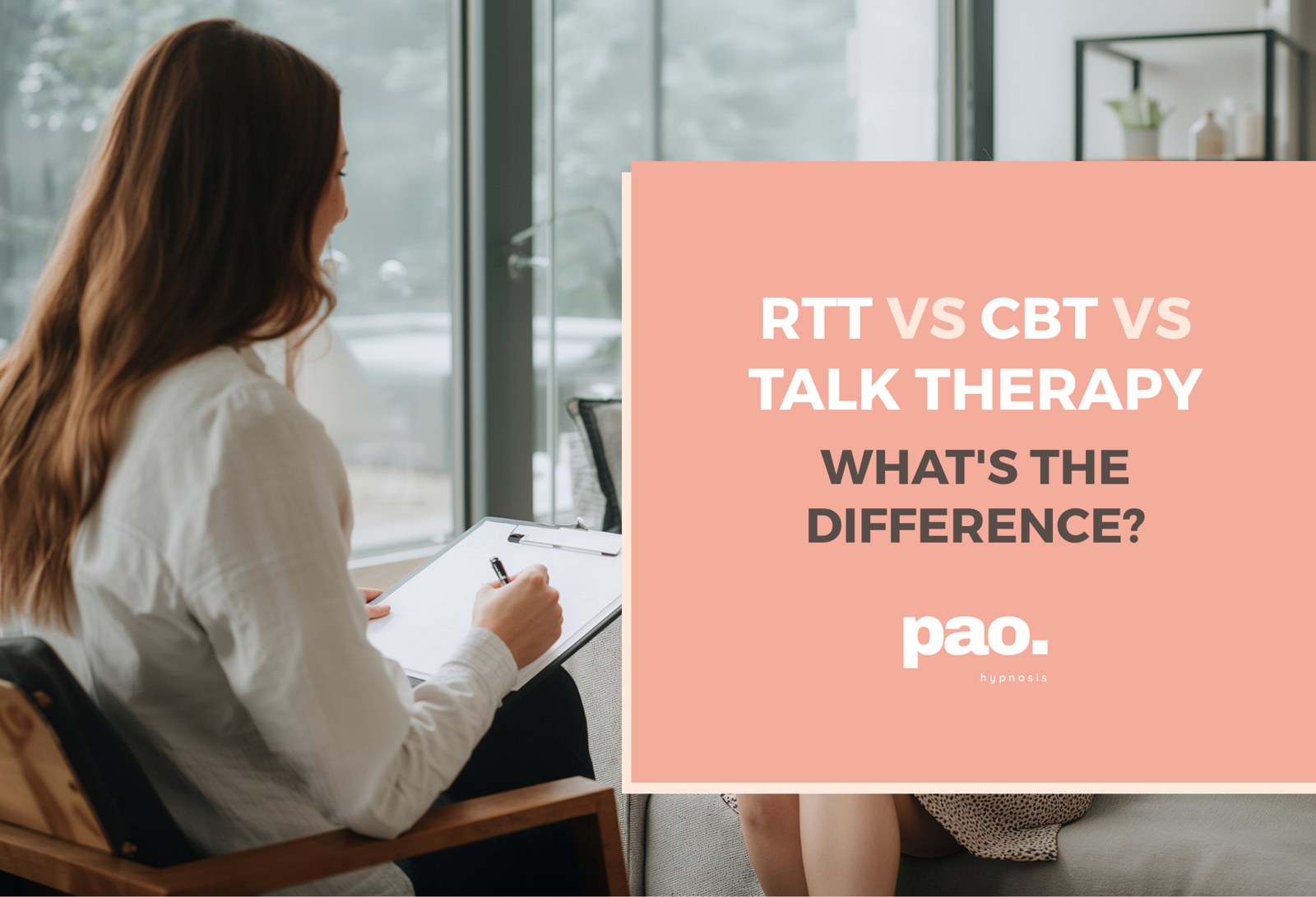
Two practitioners can both call themselves hypnotherapists and do genuinely different work.
Suggestion hypnosis relaxes you into a receptive state and delivers positive suggestions. You have met this format if you have used a sleep app or a stop-smoking recording. It can work well, particularly for habits with shallow roots.
Regression-based work, which is what RTT does, goes looking for the origin instead. In a session I guide you back to the scenes where a belief was first formed, usually in childhood, so you can see the moment your mind drew its conclusion. Then we do the part that matters: we replace that conclusion with a new one, and you leave with a personalized recording to listen to daily so the new belief actually takes hold.
The distinction is not academic. If you have already tried a hypnosis app or a generic recording and it did not stick, the method is very likely why. I have written a full walkthrough of how hypnotherapy actually works and a separate piece on what makes RTT different if you want to go deeper before choosing.
Five Questions to Ask Before You Book
Every practitioner worth your money will answer these without getting defensive. Ask them on a consultation call.
1. What method do you practice, and why that one? You are listening for a real answer about methodology, not a list of issues they treat.
2. What actually happens in a session? You should be able to picture your appointment before you arrive. If you cannot, you will spend the first twenty minutes bracing instead of settling, which is time you paid for.
3. What am I actually buying, and how will we know when I have it? You are asking them to define the outcome, not the schedule. A practitioner who can only describe a number of appointments has not thought about where you are going.
4. What happens between sessions? The work between appointments is where change consolidates. If nothing happens between sessions, ask why.
5. What does this not work for? This is the most revealing question on the list. Anyone who says hypnotherapy works for everything either has not practiced long enough to hit its limits, or is not telling you the truth.
In Person in Miami, or Remote?
I see clients both ways, in person in Miami and remotely over video, and the honest answer is that the work itself translates well to video. Hypnotherapy is a verbal, internal process. You are lying back with your eyes closed for most of it. What you need is a quiet space where you will not be interrupted for two hours, a decent connection, and headphones.
If you are choosing between a local practitioner you are unsure about and a remote one you trust, choose the one you trust.
What a Good Consultation Call Feels Like
You will learn more from twenty minutes on the phone than from any amount of reading, so it is worth knowing what a good one feels like from the inside.
You do most of the talking. The point of the call is for the practitioner to understand what you are actually dealing with. If you get through it having mostly listened to someone describe their approach, they have not learned enough about you to know whether they can help.
You leave able to picture the appointment. You should know roughly how long it runs, what you will be doing, and what you go home with. That matters practically. Arriving braced takes real time to settle out of, and that is time you paid for. I have written out exactly what happens in a session, start to finish, so nobody books with me not knowing.
The outcome gets named out loud. By the end you should both be able to say what you are working toward in plain language, and how you would know you had it. That sentence is the whole engagement. Everything else is method.
You hear the limits as readily as the possibilities. A practitioner who is comfortable in their work will tell you what hypnotherapy does not do, and will say when something belongs with a physician or a licensed mental health provider, either alongside this work or instead of it. That answer is a sign of confidence, not hedging.
You end it unhurried. A consultation is a fit conversation, and a real one can conclude with either yes or no. Good practitioners are genuinely fine with no, because working with someone who is not ready serves neither of you. If you feel pushed toward booking, you have learned something about what working together would be like.
And you feel like yourself on it. This is less measurable and it matters more than the rest. You are going to sit with this person and talk about things you may not have said out loud before. If the call is easy, that is data. Trust it.
If You Are Deciding Right Now
Most people who reach out to me have been circling the decision for months, sometimes years. They have read about it, saved a few links, and put it off. What finally moves them is usually not new information. It is being tired of running the same pattern.
If that is where you are, book consultation calls with two or three people, ask the five questions above, and choose the person whose answers you believe. That is genuinely the whole method. If one of those calls is with me, good. If none of them are, I still want you to pick well.
Ready to stop circling the decision? Book your free consultation call →
And if one-to-one sessions are not where you are financially right now, that is a real constraint and worth naming. Daily RTT-based hypnotherapy audio is the accessible version of this work. I built Mochi Zen for exactly that reason, with programs for weight loss, anxiety, and sleep, and a free trial so you can find out whether this approach reaches you before spending anything.
Frequently Asked Questions
How much does hypnotherapy cost in Miami?
Hypnotherapy in Miami runs from under $150 a session to $500 and up. That range is less useful than it looks, because most practitioners price by the hour and an hour is an input rather than the thing you came for. A better comparison is what the work is meant to achieve and how it is structured to get there. My own pricing is built around the outcome rather than an hourly rate, and I go through it on the free consultation call once I understand what you are working with.
How do I choose the right hypnotherapist for me?
Ask what method they practice and why, what actually happens in a session, what you are buying and how you will both know when you have it, what happens between sessions, and what hypnotherapy does not work for. The answers tell you whether their approach fits what you are trying to change. Method is the thing that varies most between practitioners, so it is the most useful thing to compare.
How many hypnotherapy sessions will I need?
It depends on the issue and the method. RTT is designed to work in a small number of sessions, often one to three, because the session addresses the origin of the belief rather than reinforcing a suggestion over time. Longstanding or layered issues can take longer, and any practitioner should give you a realistic range up front.
Does hypnotherapy work over Zoom?
Yes. Hypnotherapy is a verbal, internal process, and it translates well to video. You need a quiet space where you will not be interrupted, a stable connection, and headphones. I see clients both in person in Miami and remotely.
Will I lose control or be made to do something?
No. You stay fully aware and in control the entire time, and you can stop at any point. Hypnosis is a focused, deeply relaxed state, closer to being absorbed in a film than to being unconscious. I address this and the other common worries in detail in my post on hypnotherapy myths.
Can everyone be hypnotized?
Nearly everyone can enter the state hypnotherapy uses, because it is a natural state you already pass through daily, just before sleep and just after waking. What varies is how quickly people settle into it. Being analytical is not a barrier. I have written more on whether everyone can be hypnotized.
What issues do you work with?
Most of my practice is anxiety, weight and food patterns, sleep, confidence and imposter syndrome, people-pleasing, and chronic pain. You can read client results to see the range.
Do you serve Coral Gables and the rest of Miami-Dade?
Yes. I am based in the Coral Gables area and see clients from across Miami-Dade in person, plus clients elsewhere remotely.
About the Author
Paola Mendez is a Certified RTT (Rapid Transformational Therapy) Hypnotherapist trained in the method developed by Marisa Peer. She is also a certified yoga teacher and spent over a decade as a software developer before moving into hypnotherapy full time. She practices in Miami, seeing clients both in person and remotely, and is the founder of Mochi Zen, an RTT-based hypnotherapy app for weight loss, anxiety, and sleep.
This article is for informational purposes and is not medical advice. Hypnotherapy is not a substitute for medical or psychiatric treatment. Individual results vary. Please consult your healthcare provider about any medical or mental health condition.